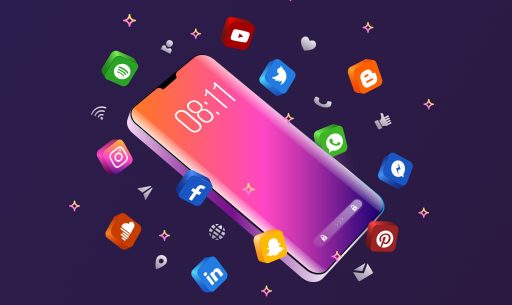

Using a smartphone seems so easy and relevant in today’s world. So much so that even a few months old baby can open a mobile app with fragile fingertips. However, the truth is quite the opposite. This is the reason why mobile app development is gaining popularity globally.
There’s an infinite use of coding languages scripted at the backend of every app installed on your smartphone. Developers craft what you see as a clear and multipurpose tool for daily routines with precise codes. The easy-to-handle gadget in your hands is the result of assembled computer geniuses.
There are numerous multifaceted languages available for corporate web design programs for smartphone apps. Each of these computer-generated dialects varies from one another. Many mobile app development service providers use these languages in accordance with the nature of smartphone applications.
These profound computer languages are sophisticated and require specialist programmers to deliver the final outcome — a mobile application. Apart from machine-learning encoding, there are several tools that assist programmers in the right direction.
At the moment, there are two major smartphone platforms relevant to mobile app development services — Android (Google) and iOS (Apple). Based on these two platforms, the following are the top programming languages used to create the next big smartphone applications.
1. Python
Probably the most famous of them all. The biggest reason for its reputation among programmers is that it’s easy to learn and master. It has a fixed set of rules and is precisely object-oriented. Its open-source code makes it simple for developers to get familiar with.
This is one of the reasons custom mobile app development companies hire Python programmers frequently. Python-based smartphone applications are also affordable, making them popular among entrepreneurs and e-commerce firms.
Furthermore, updates in Python have added to its versatility. It now has a comprehensive archive stacked with exclusive toolkits, GUI support services, adaptability for operating systems, and integration with C and C++. Popular Python applications include YouTube, Instagram, Reddit, Spotify, Quora, and BitTorrent.
2. Swift
One of the most popular programming languages for iOS-based smartphone applications. It has emerged as one of the most useful languages since it is the core coding language of Apple’s ecosystem. Swift was created from scratch for programmers to manage iOS functionalities more effectively.
Swift’s scope is diverse, used in app development for iPhones, iPads, WatchOS, and other Apple devices. Nowadays, custom mobile app development companies targeting Apple products prefer Swift, as it is safer than C-based languages. It offers multiple return values, supports various applications, and provides protocols and extensions. Swift is a standard language for creating apps across Apple’s ecosystem.
3. JavaScript
Known as a full-scale coding language, JavaScript is a multifaceted programming tool. It focuses on application functionality and efficiency. While not exclusively a mobile app language, it integrates with CSS, AJAX, and HTML to enable its strengths for mobile app development.
4. Rust
Created by Mozilla, Rust is a secure, synchronized, and versatile language designed for advanced in-app functionalities. Its composition is similar to C++ but offers added security.
One of Rust’s biggest advantages is its real-time rectification — write, edit, and move instantly. It’s ideal for programmers who want to handle complex coding while creating sophisticated mobile apps simultaneously.
5. Java
Java is best known for Android app development and is one of the most widely used programming languages worldwide. It is object-oriented, simple to learn, and highly portable. Originally developed by Sun Microsystems, it is now owned by Oracle.
Java is often used in Android-based apps, while it has limited use in iOS. It also powers server-side applications, websites, cloud databases, and mobile games.
Popular Java-based software includes NASA Whirlwind, ThinkFree Cloud Office, and Blu-ray Disc Association products. Android apps, however, remain its most notable achievement.
6. React Native
React Native is one of the fastest-growing frameworks in mobile app development. Developers prefer it because they can build cross-platform apps with a single codebase, which saves both time and cost. Since it runs on JavaScript, web developers can easily adapt to it without learning a completely new language.
Many mobile app development companies hire React Native developers to create high-performance applications. Businesses also choose it because React Native apps deliver a near-native experience on both iOS and Android, making the framework a smart option for startups and enterprises that want efficiency and scalability.
7. Ruby
Inspired by languages like Eiffel, Ada, Perl, and Smalltalk, Ruby is a dynamic object-oriented language with many benefits for developers. It offers animated and visual features that keep programmers engaged.
Ruby is commonly used for data analysis systems, prototype applications, and conventional business apps. Its error-handling and supervision functionalities make it suitable for large data management.
8. HTML5
HTML5 is the revised fifth version of HTML (Hyper Text Markup Language). It is commonly used to build web-based applications that function well on smartphones when combined with JavaScript, CSS, and Python.
HTML5 is a universal language used across platforms, especially for creating games and productivity tools. Popular tools built on HTML5 include Google Docs, Adobe Dreamweaver, Sencha Architect, Adobe Edge, and Microsoft Visual Studio 2010.
Conclusion
Choosing the right programming language for mobile app development is more than a technical decision—it’s about aligning performance, scalability, and user experience with business goals. Languages like Swift, Java, and Python continue to shape the mobile landscape, while versatile options like JavaScript and HTML5 ensure cross-platform adaptability. As the app economy grows, staying updated with these technologies is crucial for both developers and businesses seeking to build secure, high-performing, and future-ready applications.