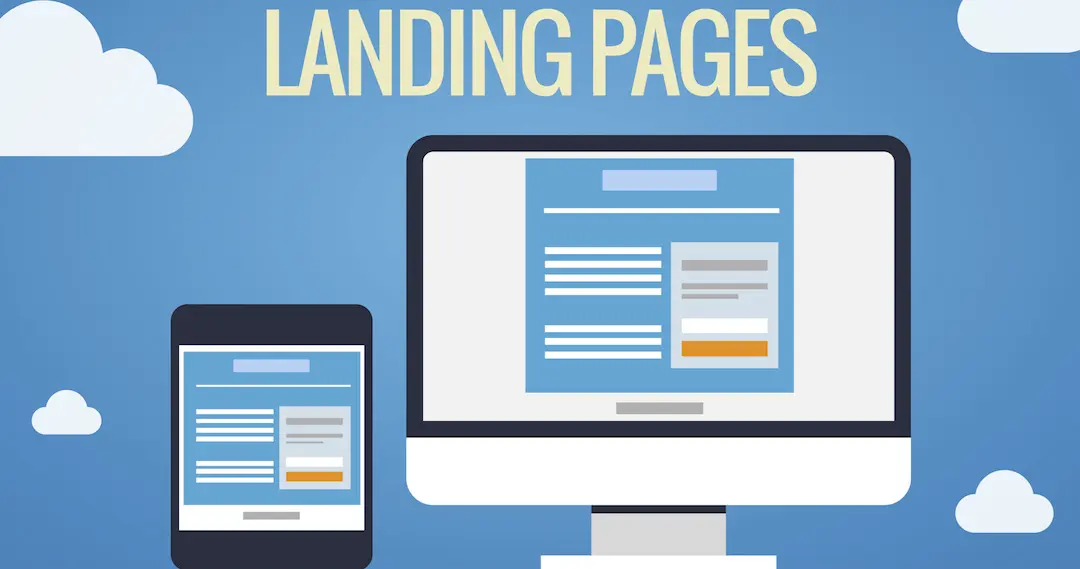

Ever conducted interviews for your firm and heard professionals say that a candidate has only six seconds to impress the interviewer? The same applies to your website’s landing page. Your potential customers do not have enough time to search for the best product or service based solely on reviews. They want a responsive design that reflects the professionalism and authenticity of the product or the service.
Even if your potential customers do have time, they will likely be attracted to a hooking design. However, designing a landing page that converts the traffic into buyers or subscribers isn’t easy. Many businesses fail trying, and only a few landing pages convert the traffic into a revenue stream.
So, what are the best landing page design practices for high conversion?
What is a High-Converting Landing Page?
A high-converting landing page is what the name suggests. It is a landing page that converts better than an average landing page. But what is a landing page after all?
In simple words, it is a digital branding page where the visitor lands. But it’s different from a homepage or a service page. While a homepage does serve the same purpose most of the time, it is not necessarily a landing page.
Whether the visitor is directed from a Google search result or a social media link to your website, the first page that appears is the landing page.
The Importance of a High-Converting Responsive Design
In today’s era, which website do you think will convert? Is it a business with a decade of experience and a good-looking landing page? Or, is it one with half as much experience, but a design that translates to high industry standards?
While they both serve the same industry, it’s often the landing page designed according to the best industry standards that takes the lead. This is where a high-converting landing page design agency is of help. They have professional designers who know how to design a landing page, so it converts better than others.
Elements of a High-Converting Landing Page Design
The purpose of a landing page is to attract the audience from start to end and subtly encourage them to buy or subscribe. For that, it needs to have some essential elements. While professional landing page designers incorporate several components to make a landing page, the key elements that give it a purpose and help it convert are discussed below.
Clean Layout and White Space
A landing page won’t convert if the layout is cluttered and unattractive. Its main purpose is to hook the visitor from the start, and the visitors view the page before they read it. Ask the professional landing page designers in the USA to use a clean layout and the right amount of white space after each section, so the visitor isn’t overwhelmed with the content and visuals.
Consistent Color Scheme
The color scheme of your landing page should be consistent and match the brand’s theme. Especially for the CTAs, the theme should match the exact color of the logo. This is one of the best landing page design practices and creates a visual hook that contrasts the brand’s colors.
Readable Typography
The landing page’s content is what makes it high-converting, and it should be visually attractive, too. Too small or too big font, choosing the wrong typography, and words overlapping with one another are all things that instantly bounce the traffic.
To get the best conversion rate, always choose the typography that matches your business voice. For example, a church should go for a traditional serif font, such as Garamond or Georgia, since it carries a more Biblical and timeless feel. A luxury fashion brand may use elegant serif fonts to reflect sophistication and exclusivity. The goal is to ensure your typography feels aligned with your brand while remaining easy to scan and read across devices.
High-Quality Visuals
Visuals are the best landing page design practices that give life to the attention-grabbing content, typography, and color schemes. Therefore, they need to be of the highest quality. Blurry images, irrelevant stock photos, or poorly designed graphics can instantly reduce credibility.
To counter that, create or design your own high-quality visuals. Use high-res visuals that align with your product or service. Videos, product mockups, and branded illustrations often work well in building trust and showcasing professionalism.
Visual Hierarchy and Contrast
Your landing page should guide visitors’ eyes toward the most important elements, typically the headline, benefits, and CTA. Visual hierarchy is created by playing with size, placement, and color contrast.
For example, a bold headline at the top immediately attracts attention, while a brightly colored CTA button stands out against a muted background. Proper contrast ensures the CTA doesn’t blend in, making it more likely to be clicked.
How to Design a Landing Page That Converts
Designing a high-converting landing page isn’t easy. It’s a work of art that requires a lot of brainstorming and several trials and errors before it goes live. While it’s just a page, designing it is a detailed procedure that can take anywhere between a few hours and a week or even more, based on the complexity.
Below is how professional landing page designers design a landing page.
Research and Goal Setting
Good research is the backbone of every good work in the IT industry. Whether it is researching trending landing page designs or understanding the client’s needs and voice, all professional landing page designers perform extensive research first. They research what goal the landing page serves to ensure the page is built with the user and business goals in mind.
Wireframing and Information Architecture
Researching extensively does not mean the designer jumps straight into responsive design visuals after it. They create a rough sketch of how the landing page will look without colors or visuals, called a wireframe. Take the example of a professional comic artist here.
Before drawing the whole comic book, the artist draws a rough sketch of how the scenes will flow. A wireframe is exactly that. While it is designed with the visuals in mind, the visuals are not drawn yet.
This helps outline the placement of headlines, visuals, forms, and CTAs. Just like comics, the focus here is on information hierarchy, ensuring the visitor’s journey flows logically from the headline to benefits, and then to action.
Visual Design and Branding
This is where the wireframe is given life. It is a creative stage in which the designers:
- Choose a color palette that aligns with the brand.
- Apply a typography hierarchy for readability.
- Use brand-aligned visuals such as product photos, custom graphics, or videos.
- Incorporate white space to keep the layout clean and professional.
The goal here is to create a visually appealing design that also builds brand trust and recognition.
Crafting Conversion-Focused Elements
No matter how creative the high-converting landing page is designed, it’s only as good as its ability to convert. To achieve this goal, the designers from a custom website design agency use methods like bold and attention-grabbing headlines and persuasive copy. Moreover, they also implement elements such as incorporating trust signals like testimonials and a strong CTA button, in contrast to lighter colors behind them.
Responsive and User-Friendly Design
Since most users today browse on mobile, responsive design is non-negotiable. Professional designers test layouts across different devices and browsers to ensure the page looks and performs flawlessly everywhere. This includes mobile-first layouts, optimized forms for touchscreens, fast-loading images, and compatibility across different browsers.
A/B Testing and Iteration
Even the best-designed landing page can improve with testing. The designers create multiple variations of key elements such as headlines, CTAs, or visuals to see which performs better. A/B testing is done one variable at a time to gather accurate insights. Once results are analyzed, the design is tweaked and refined for maximum performance.
Final Review and Launch
Nothing is free of mistakes unless you check it thoroughly multiple times. Before the page goes live, a professional landing page design agency runs through several final checks. Their team proofreads the copy for errors, tests links, forms, and CTAs, ensures accessibility, and sets up analytics tracking.
Only after these steps is the landing page launched. Even then, monitoring continues to ensure it delivers consistent results.
How You Should Approach a Landing Page Design Agency
Approaching the right landing page design agency is also crucial if you want your business’s landing page to be high-converting. The main problem here is that you don’t know what a high-converting landing page looks like, and you will surely see once it goes live. However, while a high-converting landing page is truly judged once the results start to come in, you can evaluate its effectiveness even before it goes live.
The best landing page design practices here are to approach the right agency correctly, and below is how you should do it.
Do Your Homework First
Before reaching out, define your goals, target audience, and expectations. Are you aiming to collect leads, drive sales, or promote a specific campaign? Having clarity from the start helps agencies align their design strategy with your objectives.
Evaluate Their Portfolio and Case Studies
A good landing page design agency will showcase past work. But don’t make the mistake of looking for visually appealing designs only. The main purpose of a high-converting landing page is to convert.
Therefore, check whether their pages helped clients achieve higher conversions. Look for case studies, testimonials, or proof of results in industries similar to yours.
Ask About Their Process
Professional landing page design companies always follow a structured workflow. Their teams first perform research, then make the wireframe, design the landing page, and then test and launch it. Ask them to walk you through their process. If they skip straight to design without research or testing, it may be a red flag.
Discuss Conversion Strategy, Not Just Design
An attractive page doesn’t guarantee conversions. Make sure the agency talks about conversion-focused design principles such as CTAs, trust signals, page speed, and A/B testing. If their approach is only aesthetic, reconsider.
Check Communication and Collaboration
The right landing page design software agency will act as a partner, not just a service provider. Their professionalism in communication shows that. Assess a few things in communication.
Do they listen to your business goals? Do they explain technical terms in simple language? Are they open to feedback and iteration? Clear collaboration is key to a smooth project.
Ask for a Trial or Mockup if Possible
While it’s rare, some agencies provide an initial mockup, prototype, or trial design before the full project. This gives you a glimpse into their creativity, understanding of your brand, and ability to deliver on your requirements.
Talk Budget and ROI
Price is important, but so is value. Discuss the budget transparently and ask how they measure success and return on investment. A slightly higher upfront cost may be worthwhile if the landing page design agency has a proven track record of delivering high-converting pages.
Conclusion
The first impression is often the last impression, and a landing page is your business’s first digital impression. Whether you are an online coach looking to book more calls or a businessperson running an ecommerce store, your landing page should be high-converting. Especially in this era of hyper-competitiveness, your business doesn’t stand a chance without it.
Therefore, always take your time to research before choosing the right landing page design agency. Once you hire an agency, make sure that the designers actually know what design elements go in the landing page for the most effective results. Once the results start coming in, compare them with other campaigns of the agency, so you have an idea of whether the landing page is performing or not.
In short, hire the right company and follow the right process.
Some Frequently Asked Questions (FAQs)
- Optimizing the SEO
- Paid advertisement (PPC)
- Social media marketing
- Email marketing
- Content marketing
- Influencer partnerships
- When you’re offering a free ebook, whitepaper, or any gated resource in exchange for emails.
- When you’re running a marketing campaign and don’t want to send your targeted audience to a generic homepage.
- When running Facebook, Google, or LinkedIn ads that need a focused page for click-throughs.
- When you want to sell a specific product or service with minimal distractions.